What is best for the students
I'd Like to Apologize to Every Teacher I Ever HadWhat is best for the students? is the question that gives Tony Danza’s teaching year its governing ethical test. First displayed in the Philadelphia school district office, it becomes a standard for judging not only what happens in the classroom but also whether the production of Teach serves students or turns their education into television drama.
The Question as a Promise
The words appear on a wall in the school board meeting room during protracted negotiations over whether Danza will be allowed to teach at Northeast High School. To assure board members that he intends to give his students the quality of education he would want for his own teenage daughter, he accepts an arrangement in which the producers pay for veteran teacher David Cohn to observe him. Cohn’s presence is thus more than a safeguard against a novice teacher’s mistakes: it embodies the board’s insistence that students’ education remain the first obligation.
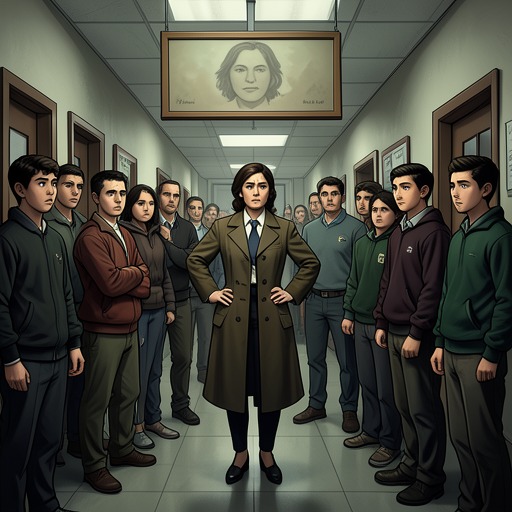
Danza initially resents having a supervisor, wanting an unassisted teaching experience. But orientation covers practical classroom dangers, including what to do if a student spits at him, and he comes to see the value of having an experienced colleague. After his first class collapses, Cohn offers consolation; later, he gives Danza a sharper lesson about the limits of a teacher’s power. A teacher cannot learn on behalf of students. The work is not a popularity contest: students must become involved in their own education. The question on the wall therefore points beyond adult intentions to the students’ actual opportunity to participate and learn.
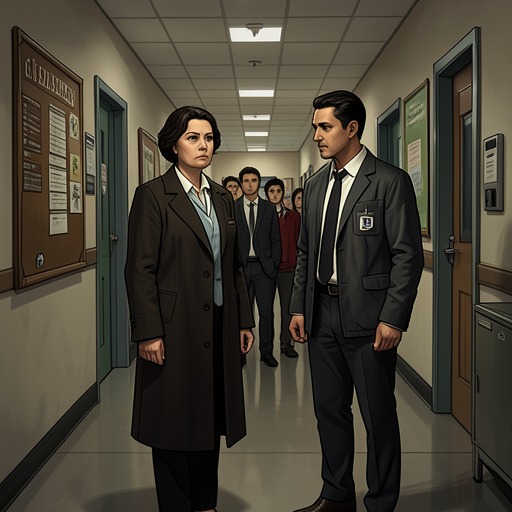
The same standard shapes principal Linda Carroll’s welcome. She tells Danza that her absolute responsibility is to ensure students are educated, and that neither he nor the production will be allowed to compromise what they need from the school year. Her support is conditional: if the experiment fails, he will be removed. The question is not an invitation to sentiment but a constraint on decisions, backed by the authority to end the arrangement.
A Classroom Standard in Practice
Danza’s account repeatedly tests the principle against the difference between a planned lesson and what engages students. When students argue about the school uniform policy, he abandons a prepared fitness prompt and asks them to explain their views. Their writing shows unusual energy, so he organizes a debate, drawing on the idea that discussion helps students retain ideas. The shift gives their disagreement a place in the lesson rather than treating it as a disruption to be suppressed.
The same emphasis on participation informs his creation-myth assignment. After students groan at the task, he pairs them to devise myths and perform them before the class. Eric Choi and Ben-Kyle present a paper-button story in which a god’s warning not to push a button guarantees that the button will be pushed and the world created. The class cheers, and the shy Eric is unsure how to respond to the praise. The episode makes the educational principle concrete: students are not merely receiving material but making and presenting it together.
For a final review before the Of Mice and Men exam, Danza replaces a conventional review with a six-team scavenger hunt across the school. Each team receives a map, a passport, challenge pages, Post-its, and markers; teachers and other staff act as station monitors, and live hamsters stand in for the novel’s mice. The teams must complete six challenges, stay together, and demonstrate integrity. The activity keeps the examination material central while giving students a structured, active way to review it.
The principle also accommodates students’ differing needs and ambitions. When Monte objects that the class is moving too slowly through To Kill a Mockingbird and that leniency toward disengaged classmates is compromising his preparation for Princeton, Danza gives him one period to design and teach his own lesson, with demanding standards of his choice. Monte arrives prepared, though classmates interrupt and disregard his directions. The experiment recognizes Monte’s academic needs without pretending that handing over authority automatically solves the class’s difficulties.
Students Before the Show
The question becomes especially consequential because Danza is not teaching outside television: the classroom is also the subject of a reality series. He initially rejects the idea, worrying that producers will privilege dramatic conflict and exploit real students’ lives. His objection is educational as well as ethical: even high ratings would not make a show worthwhile if students failed to receive the teaching they deserved.
When he agrees to pursue the project, Danza sets conditions for its production. He rejects soft scripting, in which a storyline is devised and participants are induced to enact it, and argues instead for documentary filming: cameras should record what happens, without forced or fake drama, and the episodes should be made from the footage. He calls the ambition responsible reality. The executives are doubtful, while Leslie Grief sells the subject as an urgent national education story. Danza’s closing argument insists that public-school students belong to the country’s shared future. His hope that the program might help does not displace the condition that students come first.
That condition is tested by pressure for a more dramatic show. After a Washington trip that Danza considers beautiful and educational, Grief tells him that the production has nothing and suggests that events will have to be set up. Danza’s concern is not abstract: he recalls a director signaling David Cohn to criticize him more sharply during a filmed evaluation. Cohn objects that he did not sign up to act and later threatens to quit if the production continues to push him. Danza intervenes to keep him on the project, but the incident leaves both teacher and supervisor alert to the possibility that school conflicts are being encouraged for television.
The Question’s Unfinished Answer
The production conflict culminates in the mismatch between the ending Danza values and the show’s fate. At a wrap party, students and staff gather expecting to see the first episode, while an A&E executive announces the series’ fate. The event’s noisy bowling alley becomes, in Danza’s view, a fitting image of a production whose priorities have pulled in different directions. He reflects that the show runner had sometimes made him wonder whether school problems were real or heightened for conflict, and whether student crises had been nudged by the production. The experience even leads him to think that teaching might be easier without the cameras.
Teach premieres on October 1, 2010, and lasts six weeks in a late Friday-night time slot before being canceled. Danza hopes viewers will come away with a profound appreciation of the challenge teachers face; he also sees the abrupt cancellation as leaving the story without a conclusion. The group hug at the end of the school year never airs. That missing image sharpens the book’s distinction between a meaningful educational outcome and the material a network chooses to broadcast: the students’ experience can matter even when it does not become the show’s public ending. What is best for the students? remains less a slogan than a test of whose needs govern the classroom, the filming, and the story told afterward.